

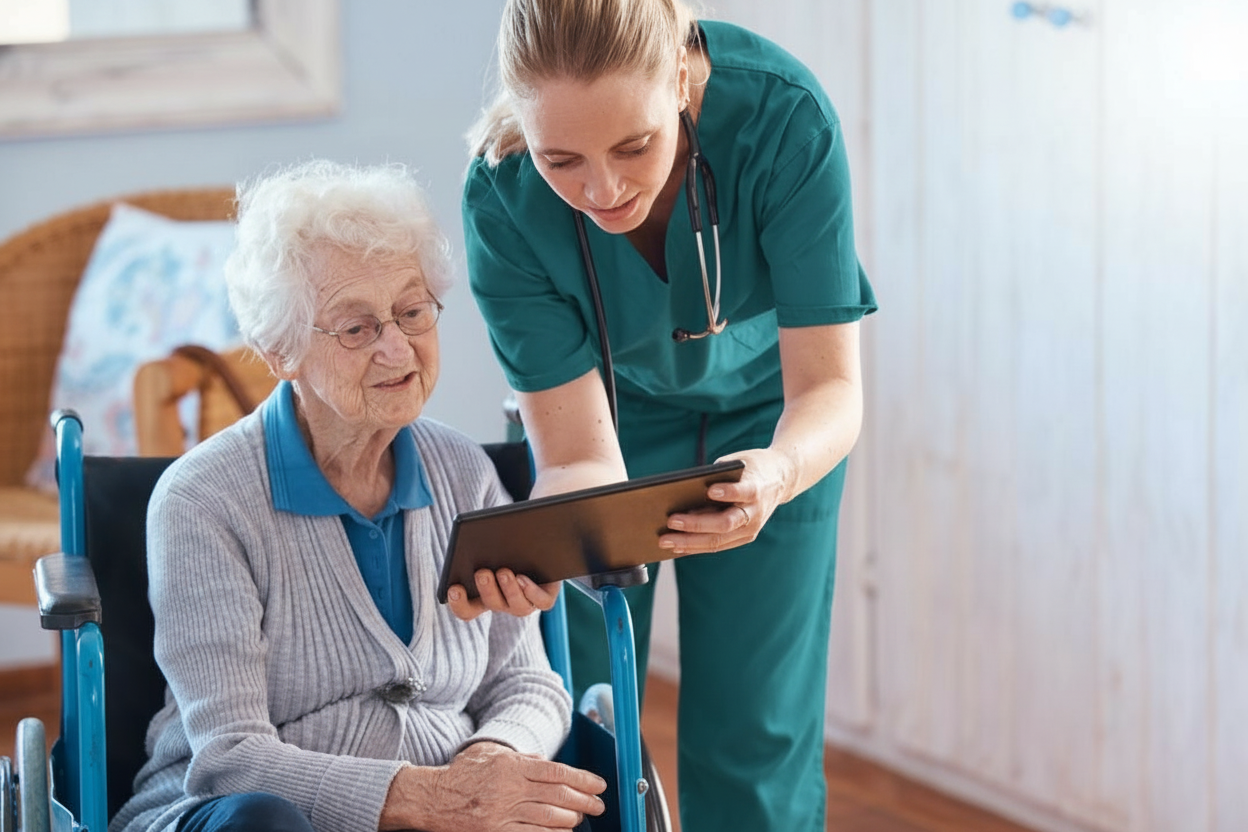
There’s often a moment that prompts the question, maybe a parent was just discharged from the hospital, or a spouse has started managing a new diagnosis, or a phone call revealed that daily tasks are harder than they used to be. Families in Minneapolis, St. Paul, and across the Twin Cities ask some version of the same thing: is it time to bring in care?
The answer depends on the person and the situation, as well as understanding the different care options.
What Is Home Health vs. Home Care?
These two terms get used interchangeably, but they describe different types of support, and understanding the difference can make it easier to know what a family actually needs.
Home health refers to skilled, clinical services delivered in the home under a physician’s order, most often nursing and therapy. A nurse might manage medications or monitor a wound, while a physical or occupational therapist helps rebuild strength or mobility after an injury or illness. Depending on the plan of care, home health can also include hands-on support like bathing, grooming, or dressing when a home health aide is part of that ordered, intermittent care.
Home care, sometimes called personal care, is different. It supports daily routines like bathing, dressing, meal preparation, and light household tasks on an ongoing basis, without requiring the same clinical oversight or physician order. It’s built around consistency and companionship rather than a specific medical need.
The two aren’t mutually exclusive. Some families need one or the other, and some need both working together over time.
Situations When Home Health May Be Part of the Conversation
There isn’t a single sign that means home health is necessary. Instead, there are different situations when families may begin learning about skilled support at home.
After a Hospital Stay or Surgery
After a hospital stay or surgery, someone’s care plan may include skilled support at home. Depending on the individual’s needs, this could include nursing or therapy as they transition back to their everyday routine at home.
Managing a Chronic or Ongoing Condition
For someone managing an ongoing health condition, skilled nursing may be part of the care plan. CareAparent’s nurses can provide clinical support at home while coordinating with the individual’s physician and Care Team.
Changes in Mobility or Function
Changes in mobility or everyday activities may also lead to a conversation about therapy at home. Physical Therapy may focus on strength, mobility, and balance, while Occupational Therapy may support safer ways to manage everyday activities at home.
None of these situations look the same from one family to the next.The type of support involved depends on the individual’s needs and care plan.
How Home Health Gets Started
Skilled home health services typically begin with a physician’s order, followed by a review of insurance coverage and an assessment to understand the individual’s needs and care plan. The process can involve coordination between the physician, the home health team, and the person receiving care.
Where CareAparent Fits In
CareAparent provides both personal care and skilled home health services, including nursing and therapy. These services address different needs, but they don’t have to exist separately. As part of CareAparent’s continuum of care, home health and home care can work together through one connected Care Team as a person’s needs change.
Someone’s needs may change over time, and the type of support involved may change too. Having these services within CareAparent’s continuum of care allows different types of support to stay connected as needs change.
If you’re wondering whether skilled home health may be part of the support your family is exploring, you don’t have to know exactly what type of care is needed before asking questions.
CareAparent can help families in Minneapolis, St. Paul, the Twin Cities, and surrounding communities better understand skilled home health, personal care, and how different types of support can work together. Contact our team to learn more about the options available.